OCTOBER 2026
“The book is a bold intervention into discussions of violence, and victimhood, and presents provocative questions about power, how it's wielded, and how it maintains itself. … As cable news panels and establishment magazines excuse or perpetuate systems that have led to the current moment, Cheung presents a daring challenge."
—Prem Thakker, Zeteo
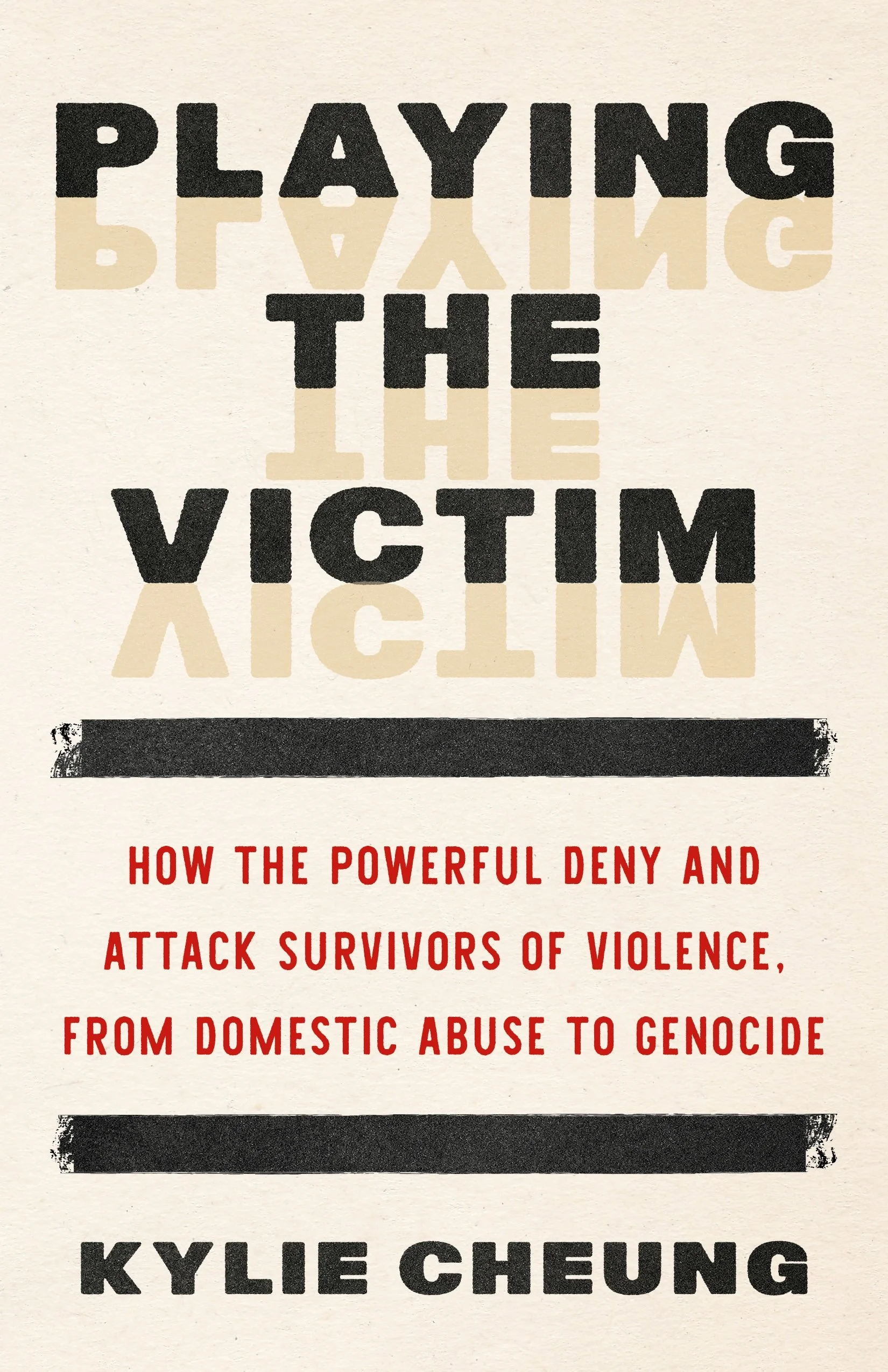
Preorder and learn more about the book, here.
Journalist Kylie Cheung delivers an urgent, incisive look at how abusers—from empires to intimate partners—use the same gaslighting playbook to oppress victims, silence their voice, and stay in power
Who has the right to their own body? Who has the right to self-defense? Who gets to walk away?
From the genocide in Gaza to the state-sanctioned control of women’s bodies, Kylie Cheung confronts the most urgent moral and political crises of our time through an incisive, illuminating lens: DARVO—Deny, Attack, Reverse Victim and Offender.
While DARVO originated in the psychology of domestic abuse and intimate partner violence, Cheung shows how it’s deployed en masse, at every level—and how it can become the blueprint for empire itself.
From the spectacle of Depp v. Heard to horrors perpetrated by Israeli prison guards, Cheung exposes how abusers both individual and institutional flip the script and perform victimhood to justify domination. With unflinching clarity, Playing the Victim traces how these tactics shape everything from media propaganda and imperial warfare to anti-feminist backlash, transphobic legislation, and racialized state violence. Each chapter peels back another layer of the mirror-world machine that distorts oppressors into victims and twists resistance into crime.
Essential for anyone seeking to understand how power works in the 21st century—and at whose cost—this book is piercing, clear-eyed, and rigorously researched. Unpacking how domestic abuse, intimate partner violence, colonial violence, and capitalist cruelty function as interlocking systems of control, Cheung helps readers understand how power hides behind ersatz victimhood—and how this plays us all.
More praise for Playing the Victim:
"Playing the Victim sets the record straight on gender-based violence in the Palestinian genocide. In the process, Cheung writes a blueprint for building solidarity between everyone whose life has been made materially worse by an abuse of power—whether that abuse of power was a sexual assault or a state-sanctioned genocide. Cheung teaches readers how to recognize a power disparity, make sense of the violence taking place, and plant their feet firmly on the right side."
—Dr. Nicole Bedera, sociologist and author of On the Wrong Side
"One of the most incisive, unapologetic writers of her generation, Kylie Cheung writes what abusers don't want named. She has never been more urgent than in Playing the Victim, tracing the abuser's script across domestic and colonial violence. Not a page went unmarked — this is a book I will return to for years to come."
—Samaa Khullar, journalist
“A searing, incisive examination of how the state wields the same playbook of domestic abusers to manufacture consent to the unthinkable. Kylie Cheung is a proven and unflinching feminist thought leader.”
—Taylor Lorenz, author of Extremely Online: The Untold Story of Fame, Influence, and Power on the Internet, founder of User Mag
"Kylie Cheung fearlessly draws parallels between rhetoric that villainizes victims of domestic violence and discourse that labels victims of genocide as the aggressors. She is unflinching in her dissection of power, violence, and gender, whether the perpetrator is an abusive partner or a militarized state. PLAYING THE VICTIM is an essential understanding of how victim-blaming enables all forms of injustice, and Cheung has proven to be an indispensable voice."
—Kat Tenbarge, Spitfire News
"Kylie Cheung's work has long exposed the connections between modern empire, bodily autonomy and rape culture. Playing the Victim's necessary application of DARVO to today's crises is a continuation of that labor. It could not come at a more urgent moment."
—Lex McMenamin, The Guardian